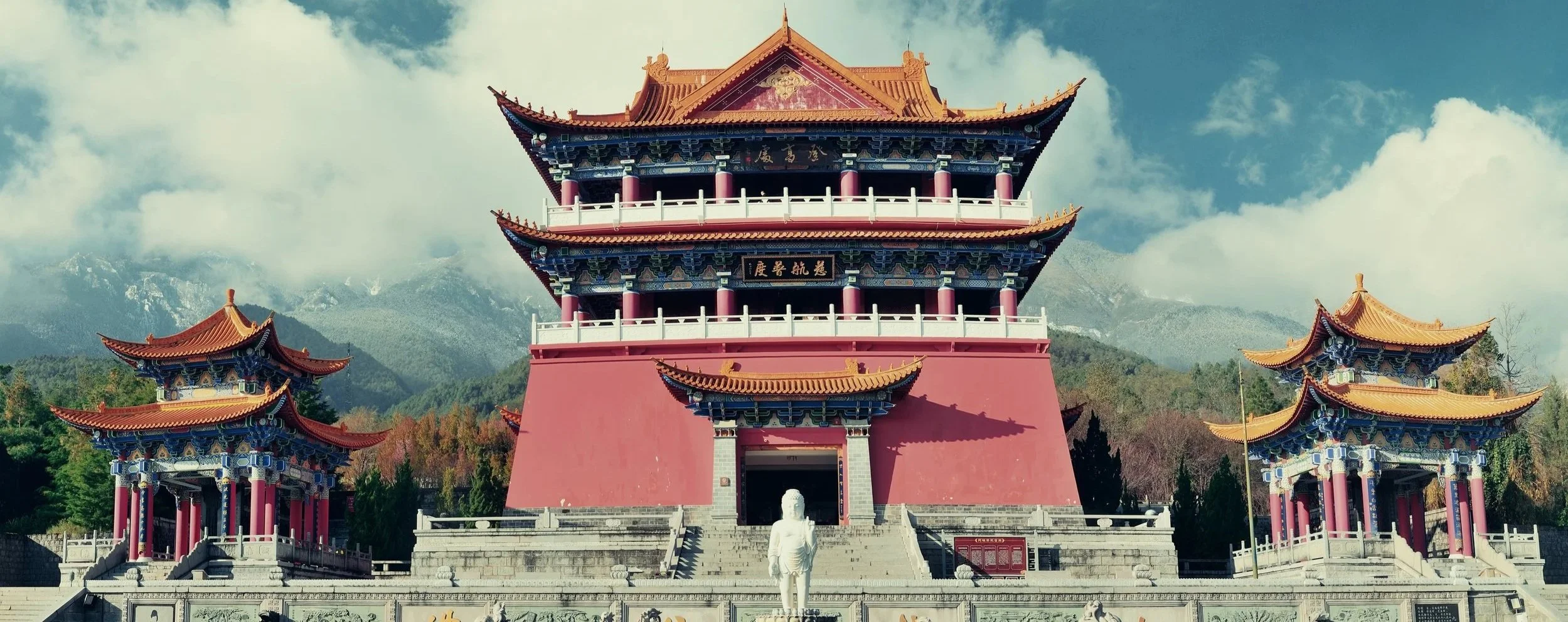
The Ancient Origins of the Chinese People
Faith Burick
Posted on Youtube by PBS, “The Ancient Origins of the Chinese People” explores the origin of China. In this documentary, Michael Wood travels to Wuxi, China to follow the Qin family, where he experiences firsthand the culture of Chinese families. This documentary teaches you about Chinese culture by showing and explaining many traditions that honor their ancestors and history. (PBS, 2024). The Youtube video starts off by explaining the civilization of China that dates back thousands of years, the oldest continuous state on earth.
The first place Michael Wood goes to is the Qing Ming Festival in Wuxi, China. “As a holiday devoted to remembering and honoring the deceased, people sweep and decorate gravesites, burn incense and paper money, and make food offerings. Observed for more than 2,500 years, the festival traditions derive primarily from Confucianism, which emphasizes respect and filial piety to the deceased” (Smithsonian, n.d.). The Youtube video focuses on the Qin family, who gather each year for the Qing Ming Festival to pay tribute to their ancestors. The way that the Qin family and many other families in China celebrate and respect their ancestors, emphasizes the importance of family in Chinese culture. “The Chinese say that if you know the family, you do not need to know the individual” (Samovar et al., 2017, 73). This quote signifies that families within Chinese families are very close to each other. The Youtube video uses the example of the Tomb Cleaning Day to highlight how individuals within Chinese culture honor their ancestors. This is a time where families come together to visit the tombs of their deceased loved ones to show their support and love for those that are no longer present. It is a beautiful ceremony that focuses on the importance of family.
This documentary relates back to some of the information we have learned in class. The PBS video explains Confucianism, stating how the analects became the guide to China’s principles of a good government. “Confucianism is a worldview, a political ideology, a social tradition, and a way of life. As one of the most prominent traditions of thought, Confucianism has lasting and profound bearings on social, political, and value systems in East Asia” (Samovar et al., 2017, 152). Both the textbook and the documentary emphasize that Confucianism technically is not a religion, but more of a worldview that teaches positive values. The rituals and traditions we see within Chinese culture express the way Chinese individuals view themselves and family. “Confucianism promotes ancestor worship and human-centered virtues for living a peaceful life. Some examples of ancestor worship include maintaining a shrine in one’s home for relatives that have passed on and making offerings of food and drink, flowers or incense at gravesites. The golden rule of Confucianism is “do not do unto others what you would not want others to do unto you.” (National Geographic, 2025). I find this way of life very interesting. Of course in other cultures we mourn the deceased, but Chinese culture actually creates shrines and performs rituals at the gravesites of their ancestors. Learning more about their specific traditions has been moving and educational.
Another interesting focus from the video was the Shang Dynasty. “The documented historical record began with the Shang Dynasty (1766?–1122? BCE) and continues unbroken to current times, making China the world’s oldest continuous civilization. This record of the past has inculcated in the Chinese an enduring sense of history, a profound pride in past grandeur, and an acute awareness of Western-perpetrated injustices suffered during the modern age” (Samovar et al., 2017, 173). I have been enjoying learning about the different aspects that make up Chinese culture. I have never heard of the Shang Dynasty before watching the PBS documentary on Youtube. “The Shang Dynasty is the earliest ruling dynasty of China to be established in recorded history, though other dynasties predated it. The Shang ruled from 1600 to 1046 B.C. and heralded the Bronze Age in China. They were known for their advances in math, astronomy, artwork and military technology” (History, 2017). I wanted to learn a little more about what was created during the time of the Shang Dynasty. What I found interesting was the creation of oracle bones. “Oracle bones from Anyang, made from cow scapulas and turtle shells, contain the earliest known examples of Chinese writing. “Oracle bones are a really important part of how Anyang [the ancient Shang capital] was discovered,” says Steinke, “and they form a very large corpus of the writing that survives.” (Roos, 2023). The way that oracle bones were made and how they were utilizied, is important to the Chinese history and civilization. Chinese people often visit shrines of the Shang Dynasty in the Yellow River Valley.
Towards the end of the PBS documentary, we are given a brief explanation of the first united China, that was held together by force and fear. The first Qin emperor killed hundreds of Confucian scholars and ordered all history books to be burned. In the year 0 of Qin year, any proof of history was meant to be erased. Several years later, the people of China began to revolt. This started the new dynasty, the Han dynasty. “The Han copied the highly centralized Qin administrative structure, dividing the country into a series of administrative areas ruled by centrally appointed officials and developing a salaried bureaucracy in which promotion was based primarily on merit. Unlike the Qin, however, the Han adopted a Confucian ideology that emphasized moderation, virtue, and filial piety and thereby masked the authoritarian policies of the regime” (Britannica, 2026). This was a crucial change in expanding Confucianism in China.
In conclusion, I have learned tons of new information from the PBS documentary, the Communications Between Cultures textbook, and Intercultural Communications class. Chinese culture has been very interesting and educational to learn about. It is important for everyone to know parts of Chinese history and culture.
Additional Related Resources
https://www.chinahighlights.com/travelguide/culture/
https://www.livescience.com/28823-chinese-culture.html
References
Britannica. (2026, March 2). Han dynasty | Definition, Map, Time Period, Achievements, & Facts. Britannica. Retrieved April 11, 2026, from https://www.britannica.com/topic/Han-dynasty
History. (2017, December 13). Shang Dynasty - Achievements, Facts & Government | HISTORY. History.com. Retrieved April 11, 2026, from https://www.history.com/articles/shang-dynasty
National Geographic. (2025, September 30). Confucianism. National Geographic Education. Retrieved April 11, 2026, from https://education.nationalgeographic.org/resource/confucianism/
PBS (Director). (2024). The Ancient Origins of the Chinese People | Story of China w/ Michael Wood | Full Episode 1 | PBS [Film]. PBS. https://www.youtube.com/watch?v=MucaZDoMzqg&list=WL&index=1&t=2461s
Roos, D. (2023, August 11). 7 Everyday Objects From the Shang Dynasty | HISTORY. History.com. Retrieved April 11, 2026, from https://www.history.com/articles/everyday-objects-shang-dynasty
Samovar, L. A., Porter, R. E., McDaniel, E. R., & Roy, C. S. (2017). Communication Between Cultures. Cengage Learning.
Smithsonian. (n.d.). Qing Ming Festival. National Museum of Asian Art. https://asia-archive.si.edu/learn/for-educators/teaching-china-with-the-smithsonian/videos/qing-ming-festival/#:~:text=The%20Qing%20Ming%20Festival%2C%20literally,and%20decorate%20gravesites%2C%20burn%20incense