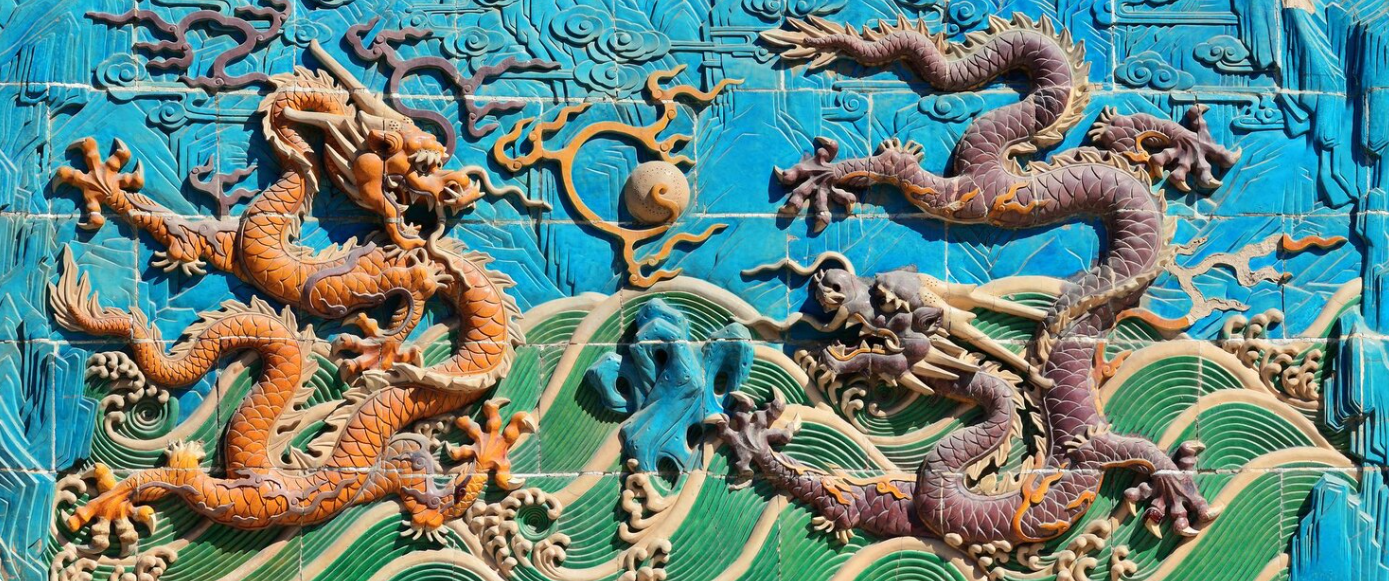
Traditional Chinese Culture
Ryan Robich
Tradition Chinese culture is a complex tapestry woven from a millennium of philosophical evolution, social structuring, and spiritual practice. As outlined in my article “Traditional Chinese Culture,” this heritage is not merely a collection of historical artifacts but a living system of wisdom that continues to dictate behavior and worldviews. To understand these customs fully, one must view them through the lens of intercultural communication, specifically the frameworks provided in our textbook “Communication Between Cultures.” This helps integrate scholarly perspectives on Confucianism, Taoism, and the unique relational dynamics we see in Chinese culture. At the heart of Chinese living wisdom is the concept of harmony. Samovar identifies this as “a hallmark of Eastern collectivist cultures, where the interest of the groups supersedes those of the individual” (Samovar, 2017). According to the Asia Society, this is deeply rooted in the Confucian tradition of the “Five relationships,” which establish a clear hierarchy to ensure stability. This structure is not intended to be oppressive but rather a means of creating a predictable social order through reciprocal obligations. The living wisdom of China is defined by its dualistic understanding of the universe, primarily the concept of Yin and Yang. This balance informs everything from daily diet to traditional Chinese medicine. While Western logic often seeks “either/or” solutions, Chinese wisdom embraces “both/and” thinking. The Stanford Encyclopedia of Philosophy notes that this holistic worldview encourages a long-term orientation, a value Samovar highlights as a key dimension of Chinese culture, where patience is valued over immediate results (Stanford Encyclopedia of Philosophy, 2007). Connecting these values to social interaction brings us to Guanxi, or the system of social networks. In Chinese culture, the “self” is socially constructed; a person exists primarily in relation to others. This helps explain the emphasis on Filial Piety (Xiao). As detailed in Brittanica’s analysis of Chinese ethics, this value is the bedrock of the family unit, extending beyond life into ancestor worship, ensuring a continuum between the past and the future (Encyclopedia Britannica, n.d.). Communication styles in China reflect these values as well. Samovar emphasizes that China is a high-context culture, where meaning is often conveyed through non-verbal cues and the context of the relationship rather than just words (Samovar et al., 2017). This can be linked to the concept of “Face” (Mianzi). According to commisceo-global.com, maintaining face is essential for social harmony; directness is often avoided to prevent embarrassment, a contrast to the low-context, direct communication styles found in the West. While Confucianism provides the “outer” structure of society, Taoism provides the “inner” guide. The concept of Wu Wei (effortless action) teaches individuals to align with the natural flow of the universe. This philosophy balances the rigid moralism of Confucianism, providing a source of artistic inspiration and psychological peace. In our textbook, Samovar discusses power distance, the extent to which society accepts that power is distributed unequally. Traditional Chinese culture is a high-power distance society, a trait heavily influenced by the Confucian emphasis on Li (ritual and propriety). According to the Asia Society, Li originally referred to religious sacrifice but evolved to encompass the secular ceremonial behaviors that govern social life. This value ensures that respect is automatically accorded based on age, rank, and family position. In a modern context, this translates into a workplace of culture where employees often wait for direction from superiors rather than taking independent initiative, preserving the hierarchical harmony that has defined the civilization of millennia. Another critical dimension identified by Samovar is long-term orientation. While many western cultures are driven by quarterly results and immediate gratification, Chinese living wisdom is rooted in persistence and thrift. This “long view” is backed by the Taoist perspective of cyclical time. As the Stanford Encyclopedia of Philosophy notes, the Taoist understanding of the world suggests that change is only constant, and extremes eventually revert to their opposites. This encourages a cultural temperament of patience. Whether business negotiations or personal development, the Chinese approach emphasizes building a foundation that will last for generations, rather than seeking a “quick fix.” Lastly, the concept of Datong, or “The Great Unity,” represents the Chinese vision of a utopian world where everyone looks after one another. This reinforces the collectivist nature of the culture. Unlike the Western “rugged individualist” who seeks to stand out, the Chinese individual finds purpose through their contribution to the whole. Britannica highlights that this collective responsibility begins with the family but extends to the “state-family” (Guojia). This blurred line between the private and spheres means that an individual’s success brings honor to their entire lineage, while their failure brings them collective shame (Diu Lian). Thus creates a high-stakes environment for social performance, driving the incredible work ethic often associated with the region. In conclusion, traditional Chinese culture represents a sophisticated synthesis of ethical, social, and spiritual wisdom that prioritizes the collective over the individual and harmony over discord. By viewing these traditions in Larry A. Samovar’s textbook, we can see how the presented concepts remain relevant today and for years to come.
Works Cited
Asia Society. (n.d.). Confucianism. https://asiasociety.org/education/confucianism
Commisceo Global. (n.d.). China country guide. https://commisceo-global.com/country-guides/china-guide
Encyclopaedia Britannica. (n.d.). Xiao (Confucianism). https://www.britannica.com/topic/xiao-Confucianism
Samovar, L. A., Porter, R. E., McDaniel, E. R., & Roy, C. S. (2017). Communication between cultures (9th ed.). Cengage Learning.
Stanford Encyclopedia of Philosophy. (2016). Daoism. https://plato.stanford.edu/entries/daoism/