Understanding Chinese Culture Through The Farewell
Dylan Wragg
Description of the Chosen Media
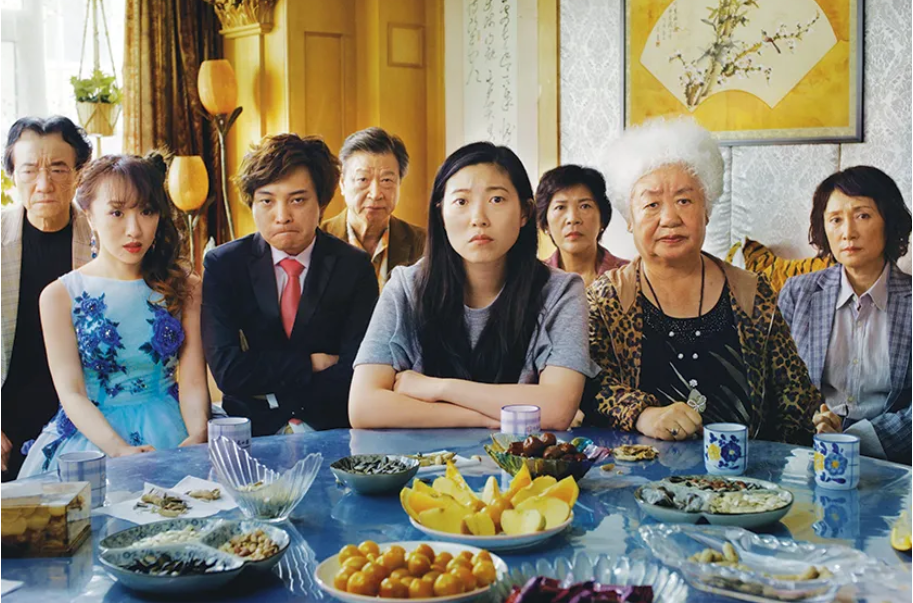
The Farewell is a film directed by Lulu Wang that follows a Chinese American family after they learn that their grandmother, Nai Nai, has terminal cancer. Instead of telling her the truth, the family decides to keep the diagnosis a secret and organizes a fake wedding so everyone can gather together one last time. The story focuses on Billi, who grew up in the United States and struggles with the family’s decision to hide such important information.
The movie highlights a major cultural conflict between Western and Chinese values. In American culture, honesty and individual rights are often seen as most important. In contrast, the film shows how Chinese culture places a stronger emphasis on family responsibility and protecting others from emotional harm. Throughout the movie, viewers see how cultural values shape communication, decision making, and emotional expression. Because of this, The Farewell is a strong example of how culture influences the way people handle serious situations and interact with one another.
Relevance to Intercultural Communication Concepts
The Farewell connects directly to several key concepts discussed in Communication Between Cultures. One of the most important is collectivism. In collectivist cultures, people prioritize group harmony and shared responsibility over individual preferences (Samovar et al., 2017). This is clearly shown in the film when the family decides to carry the emotional burden themselves rather than telling Nai Nai the truth.
Another important concept is high context communication. In high context cultures, meaning is often communicated indirectly through relationships, nonverbal cues, and shared understanding instead of direct statements (Hall, 1976; Samovar et al., 2017). Throughout the movie, the family avoids openly discussing the illness, relying instead on indirect communication to maintain harmony.
The film also reflects the concept of “face,” which refers to maintaining dignity, respect, and social harmony (Ting-Toomey, 1988). The family believes that telling Nai Nai the truth could disrupt her emotional stability and cause unnecessary distress, so they act in a way that protects her sense of peace.
Additionally, the film demonstrates intercultural conflict, where individuals from different cultural backgrounds interpret the same situation differently (Samovar et al., 2017). Billi’s reaction reflects Western values, while her family’s response reflects traditional Chinese cultural norms.
Analysis and Personal Take
When I first watched The Farewell, I honestly disagreed with the family’s decision. From my perspective, it seemed unfair to hide something as serious as cancer from someone. I was thinking about it from a typical American viewpoint where honesty is expected, especially in important situations. But after learning more about intercultural communication, my perspective changed.
The biggest thing I realized is that communication is not universal. What seems right in one culture might not be seen the same way in another. In this case, the family’s decision was not about lying, but about protecting their grandmother and maintaining harmony. Instead of focusing on individual rights, they focused on what was best for the group.
This made me think about how quickly people judge situations without understanding the cultural background behind them. Before taking this class, I probably would have just said the family was wrong. Now, I understand that their decision was based on values like responsibility, respect, and emotional protection.
Another thing that stood out to me was how indirect communication worked in the film. I am used to direct communication where people say exactly what they mean. In the movie, a lot of important information is never said out loud. At first, this felt uncomfortable and confusing. But after thinking about it, I realized that this style actually helps avoid conflict and keeps relationships stable.
The idea of face also changed how I viewed the situation. In American culture, telling the truth is often seen as the most respectful thing you can do. But in Chinese culture, protecting someone’s emotional well being can be just as important. This shows that respect can look different depending on cultural values.
I also related to Billi because she is caught between two cultures. She understands her family’s perspective, but still struggles with it because of how she was raised. This reflects what many people experience when they grow up in one culture but are influenced by another. It shows how cultural identity can shape the way people think and communicate.
Overall, this movie made me more aware of how culture influences everyday decisions. It also showed me that effective communication is not just about what you say, but how and why you say it.
Summary and Conclusion
The Farewell is a strong example of how culture shapes communication. Through the story, viewers can see how collectivism, high context communication, and the concept of face influence the way people interact and make decisions.
Personally, I think the film does a good job of showing Chinese cultural values in a realistic way. It also highlights how misunderstandings can happen when people from different cultures view situations differently.
The main takeaway is that there is no single correct way to communicate. Cultural values play a huge role in shaping behavior, and understanding those differences is important in today’s global world. This film helped me realize that being open minded and aware of cultural differences can improve communication and reduce misunderstandings.
References
Gudykunst, W. B. (2004). Bridging differences: Effective intergroup communication. Sage Publications.
Hall, E. T. (1976). Beyond culture. Anchor Books.
Matsumoto, D., Yoo, S. H., & Nakagawa, S. (2008). Culture, emotion regulation, and adjustment. Journal of Personality and Social Psychology, 94(6), 925–937. https://doi.org/10.1037/0022-3514.94.6.925
Samovar, L. A., Porter, R. E., McDaniel, E. R., & Roy, C. S. (2017). Communication between cultures (9th ed.). Cengage Learning.
Ting-Toomey, S. (1988). Intercultural conflict styles. In Y. Y. Kim & W. B. Gudykunst (Eds.), Theories in intercultural communication (pp. 213–235). Sage Publications.